Review summary
Two friends join a cross-country bus tour of glitches in their simulated world, turning a strange vacation into an intimate reckoning with illness, secrets, friendship, and reality.
Full review
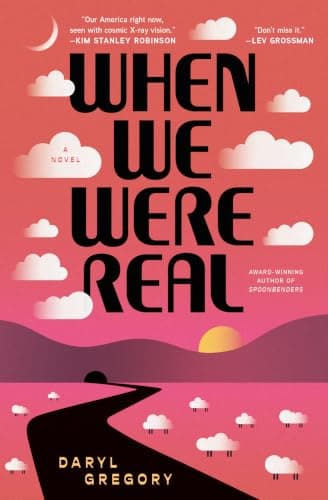
When We Were Real begins after humanity learns that reality is simulated and the world responds with confusion, tourism, denial, and new forms of commerce. Two friends join a bus trip to visit visible glitches, carrying private fears that make the cosmic question feel personal.
Daryl Gregory treats the road trip as an ensemble comedy and an existential reckoning. The simulated-world premise creates spectacle, but the novel's real interest is how people love, lie, grieve, and make plans when reality itself no longer guarantees meaning.
A glitch tour with human stakes
Each stop offers a new violation of ordinary physics, while the passengers' relationships prevent the trip from becoming a catalogue of clever effects.
Who will enjoy it
This suits readers who like philosophical science fiction with warmth, dark humor, friendship, illness, and road-trip ensembles rather than technical simulation theory.
Key ideas
- Meaning can survive even when reality is artificial.
- Tourism turns the incomprehensible into a product without resolving fear.
- Friendship depends on truths people may postpone sharing.
If you liked this, read next
FAQ
- Is When We Were Real hard science fiction?
- No. It uses a simulation premise to explore friendship, mortality, and meaning through an accessible road-trip story.
- Is it depressing?
- It addresses illness, grief, and existential fear, but balances them with comedy, affection, and an energetic ensemble.
Reading guide
- Track what each traveler wants from the glitches.
- Notice how humor changes when private stakes emerge.
- Ask whether proof of simulation changes moral responsibility.
As an Amazon Associate, I earn from qualifying purchases.