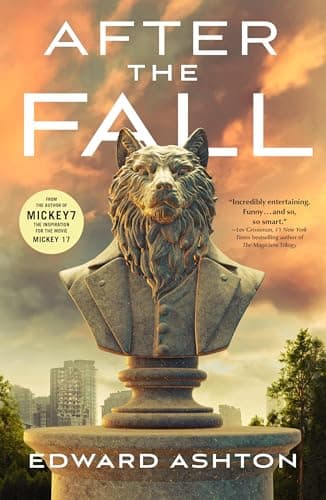
Review summary
A century after alien grays reduced humanity to bonded dependents, John learns the limits of friendship when his gray companion Martok wagers John's bond on a failed wilderness business.
Full review
After the Fall imagines humanity one hundred and twenty years after defeat and a century after alien grays collected the survivors. John lives as a bonded human attached to Martok, a broke and impulsive gray who treats him better than most—until Martok uses John's bond as collateral for a wilderness business.
Edward Ashton turns alien invasion into buddy comedy and workplace satire without softening the ownership at its center. John and Martok may care for each other, but affection cannot erase a system that lets one friend legally gamble the other's life.
Would humans make good pets?
The provocative question exposes how obedience is taught and normalized. John's relative comfort makes recognizing exploitation more complicated, not less necessary.
Tone and audience
Dry humor, business failure, alien bureaucracy, and genuine vulnerability sit beside slavery and post-invasion trauma. Readers of Mickey7 will recognize Ashton's balance of bleak systems and comic voice.
Key ideas
- Kind treatment does not make ownership ethical.
- Friendship cannot be equal when one person controls the other's legal status.
- Failed businesses reveal who is treated as expendable collateral.
If you liked this, read next
FAQ
- Is After the Fall connected to Mickey7?
- No. It is a standalone novel with a separate alien-invasion setting.
- Is After the Fall a comedy?
- It uses buddy comedy and workplace satire, but the underlying system of human bondage gives the humor serious stakes.
Reading guide
- Separate Martok's intentions from his power over John.
- Track the rules governing bonded humans.
- Notice when workplace language hides coercion.
As an Amazon Associate, I earn from qualifying purchases.