Review summary
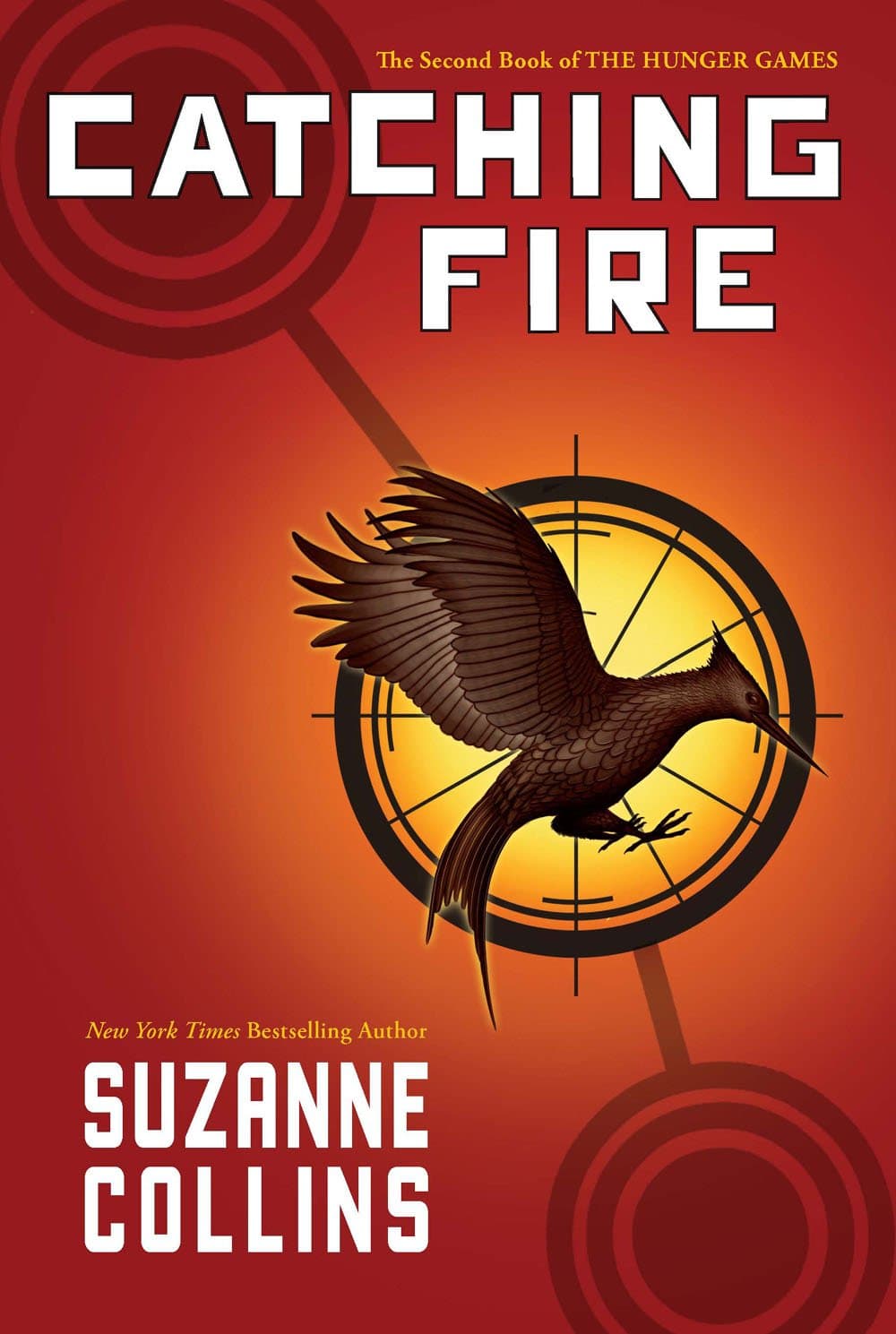
This spoiler free review of Catching Fire by Suzanne Collins walks through why this classic dystopian novel that book 2 of the hunger games trilogy still hooks readers. Catching Fire widens Panem’s unrest as Katniss and Peeta face a lethal victory tour and a Quarter Quell designed to crush rebellion.
Full review
Catching Fire picks up after The Hunger Games with Katniss and Peeta back in District 12, carrying a victory that feels more like a threat than a reward. The uneasy calm of the victory tour slowly cracks as Panem starts to show signs of open unrest, and the new Quarter Quell twist turns their previous survival into the first move of a larger game.
Suzanne Collins keeps the prose lean and almost cinematic. Travel, propaganda shoots, and tense private conversations build dread long before anyone steps into an arena. Training sessions and the Quarter Quell itself deliver the spectacle many readers expect, but the most haunting moments often happen in quiet exchanges with Haymitch, Gale, and Peeta, when the cost of being a symbol is hardest to ignore.
The book broadens the political canvas while staying rooted in Katniss's point of view. New allies like Finnick, Johanna, and Beetee arrive with their own histories and coping strategies, adding both humor and heartbreak to the cast. If you enjoy competition and strategy driven stories, you can compare this arc with the tactical tension in our Fourth Wing review and see how different genres use training, alliances, and public image to test their characters.
Rereading Catching Fire now, the media angle feels especially sharp. Capitol broadcasts, carefully staged interviews, and the performance of romance are never just background decoration. They are tools, weapons, and sometimes lifelines, and the novel stays interested in how ordinary people read those signals and choose whether to follow or resist.
Catching Fire Review Highlights
Expands Panem beyond the first book, showing how unrest builds in each district before it explodes.
The Quarter Quell arena introduces inventive, deadly set pieces that keep survival strategy front and center.
New allies like Finnick and Johanna add humor, trauma, and tension in ways that deepen Katniss and Peeta's journey.
Best Audience for Catching Fire
Readers who want fast paced young adult dystopian fiction with a strong mix of action, politics, and emotional stakes.
Fans of stories where alliances matter, every conversation can shift the plan, and symbols are as important as weapons.
Related Rebellion Reads
Browse our dystopian fiction archive for more novels where media, resistance, and everyday survival collide.
Rewatch the Catching Fire film after reading to notice which political beats and character moments the adaptation highlights.
Key ideas
- Symbols gain power when communities recognise their own struggles in a public figure.
- Media messaging can either strengthen or fracture resistance movements.
- Trust requires vulnerability, especially when every alliance carries a hidden agenda.
If you liked this, read next
FAQ
- What is Catching Fire about?
- Catching Fire by Suzanne Collins follows Katniss and Peeta as they face a dangerous victory tour, growing rebellion across Panem, and a new Quarter Quell that throws former victors back into the arena. It blends action, political tension, and character growth as the stakes move beyond a single Games.
- Who will enjoy Catching Fire?
- Readers who liked The Hunger Games and want more worldbuilding, higher stakes, and richer character dynamics will find this sequel satisfying. It is a strong pick for teens and adults who enjoy dystopian fiction with clear emotional through lines.
- What themes stand out in Catching Fire?
- The novel explores what happens when a symbol of hope is also a frightened teenager, how media can both fuel and control unrest, and why trust becomes harder as the fight grows larger. It keeps circling questions about loyalty, performance, and who pays the price for revolution.
- Is there anything to know before starting Catching Fire?
- Catching Fire is the second book in The Hunger Games trilogy, so it works best if you have already read the first installment. Expect a darker tone, more complicated relationships, and an ending that clearly points toward the final book.
Reader-focused angles
This review intentionally answers longer questions readers often ask, such as catching fire plot summary and main themes as the second hunger games book, catching fire age rating, emotional intensity and who will enjoy this sequel, books like catching fire for readers who enjoy escalating dystopian stakes, and catching fire new characters, symbols and ideas to discuss, so the guidance fits naturally into the analysis instead of living in a keyword list.
Each section of the review is written to speak directly to those searches, making it easier for book clubs, educators, and new readers to find the specific perspectives they need.
Reading guide
- Track each district visit during the victory tour and note how the mood shifts from fear to anger or hope.
- Pay attention to the differences between Katniss and Peeta's public performances and their private conversations for a nuanced discussion of image control.
- Create a simple chart of the Quarter Quell tributes, their skills, and their alliances to follow how strategy evolves inside the arena.
As an Amazon Associate, I earn from qualifying purchases.