Review summary
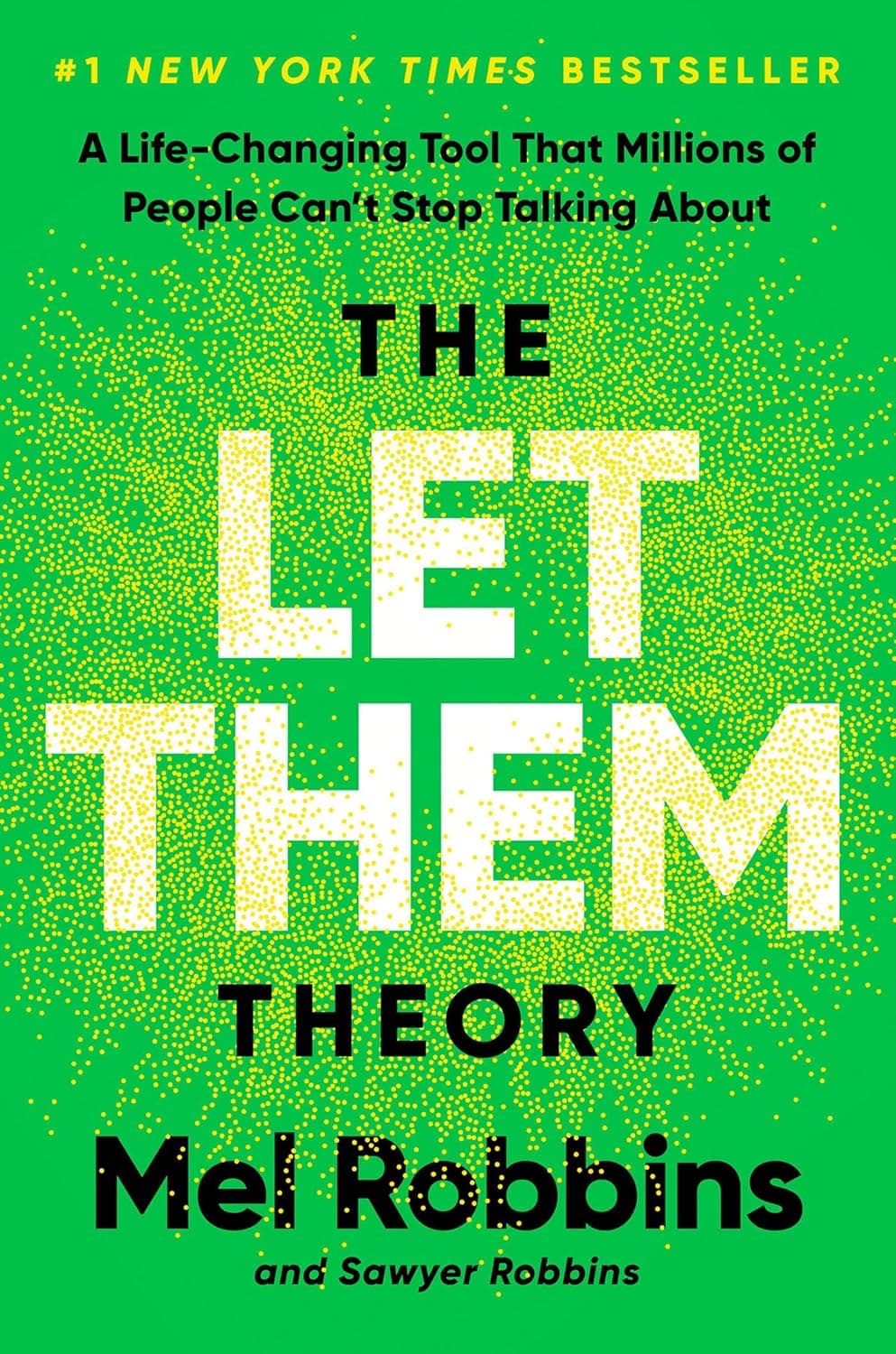
This spoiler free review of The Let Them Theory by Mel Robbins walks through why this narrative nonfiction book that a life-changing tool for letting go of control still hooks readers. This The Let Them Theory review looks at Mel Robbins' viral boundaries idea, explaining how let them and let me work in real life, who this book helps most, and where its limits and criticisms show up.
Full review
This spoiler free The Let Them Theory review explains Mel Robbins' viral idea in plain language. Instead of another long list of hacks, the book centers on two short phrases, let them and let me, as a way to stop micromanaging other people's choices and redirect that energy toward your own boundaries, goals, and daily habits. Robbins mixes personal stories, listener letters, and simple exercises, so the tone feels closer to a long podcast episode than a dense psychology textbook.
Readers who wonder if The Let Them Theory is really worth reading in 2025 will probably care about two things: how practical it feels in everyday conflict and whether it slides into toxic positivity. The strongest chapters give specific scripts for family fights, friendship disappointments, and work drama, then pair let them with clear let me actions so you are not just tolerating bad behavior. Robbins also repeats that the framework is not for abusive, discriminatory, or unsafe situations, which keeps the message from turning into a blank instruction to stay quiet and smile.
The book lands best for people pleasers, burned out parents, and high achieving readers who have tried to control everything around them. If you liked books such as The Anxious Generation and other titles about anxiety and attention, you may appreciate how The Let Them Theory zooms in on your side of the equation, giving you permission to drop some fights and reclaim time for sleep, hobbies, and real connection. On the other hand, readers who want deep clinical research or who are sensitive to influencer style storytelling may find the repetition, productized language, and lack of citations frustrating.
Robbins describes how she discovered the idea through messy family moments, but the wider conversation around the book includes criticism about whether letting them is really new, how it overlaps with older ideas like radical acceptance and stoicism, and how fairly earlier uses of the phrase are credited. If you arrive from TikTok already skeptical, this review will help you see both the value and the limits of the method so you can decide whether to borrow the core tool, push back against its weaker claims, or simply skip the book and apply a lighter version of the mindset in your own way.
In practice, The Let Them Theory works less as a full life philosophy and more as a reset button you can press in specific moments: a friend stops replying, a colleague takes credit, a relative judges your choices. Used that way, it can lower anxiety and reduce unnecessary arguments. Used on situations that involve injustice, safety, or structural problems, it feels thin. This review is written for readers who want a balanced, non hype overview of the let them and let me ideas, including how they play out in modern family life, social media, and work culture.
The Let Them Theory Review Highlights
A clear explanation of the core let them and let me framework, with everyday examples from family, friendships, work, and social media.
Practical scripts and journal prompts that help anxious readers and people pleasers practice setting boundaries without turning into stone cold robots.
A balanced look at where the theory genuinely helps and where critics argue it oversimplifies complex situations or ignores power and safety.
Who Should Read The Let Them Theory
Readers who constantly replay conversations in their head, worry about being liked, or feel responsible for everyone else's mood.
Parents and caregivers who already think about anxiety, screen time, and modern childhood and want a simple phrase to use when kids pull away, post online, or choose different paths than expected.
Fans of conversational, story driven self help who are comfortable with a podcast style voice rather than dense academic research.
Helpful Resources For Let Them Readers
Read one chapter at a time and pick one let them situation and one let me action you can test that week instead of trying to overhaul every relationship at once.
Pair this book with more research heavy titles about boundaries, attachment, or mental health if you want extra depth behind Robbins' stories.
Use the ideas as a starting point for conversations with friends, partners, or a therapist about where letting them is healthy and where you need firmer lines and support.
Key ideas
- Let them is a shorthand reminder to stop chasing, fixing, or persuading people who consistently show through their actions that they are not ready to meet your needs.
- Let me shifts the focus back to your choices, such as how you protect your time and energy, what you work toward, and which relationships you continue to invest in.
- The method is most useful when it is combined with honest communication and an understanding of trauma and power, so it is never used to excuse harm or stay silent in the face of injustice.
If you liked this, read next
FAQ
- What is The Let Them Theory about?
- The Let Them Theory by Mel Robbins is a self help book built around a simple boundary tool. Instead of trying to control other people's choices, you practice saying let them, then turn your attention to let me, which covers the actions you can actually take to protect your time, energy, and well being.
- Is The Let Them Theory worth reading in 2025?
- If you struggle with people pleasing, replaying conversations, or feeling responsible for everyone's happiness, The Let Them Theory can be worth reading in 2025 as a practical reset. If you already read a lot of psychology or want deep new research, you may find the book repetitive and prefer to borrow the core idea and move on.
- Who will enjoy The Let Them Theory, and who might want to skip it?
- The book suits goal oriented women and men who like podcast style advice, real life stories, and short exercises they can try the same day. Readers who need trauma specific guidance, highly structured therapy tools, or a more neutral tone around self promotion may want to look to other boundary and mental health books instead.
- What criticism and controversies surround The Let Them Theory?
- Critics point out that the idea of letting people be who they show you they are is not new and overlaps with older philosophical and therapeutic frameworks. Some coverage has also questioned how original the phrase is and whether the book sometimes glosses over structural problems such as inequality or abuse. The review on this page acknowledges those debates while still explaining how a reader can adapt the let them and let me ideas in a thoughtful way.
Reader-focused angles
This review intentionally answers longer questions readers often ask, such as the let them theory summary and review without toxic positivity, is the let them theory worth reading in 2025 for anxious parents and people pleasers, who should read the let them theory by mel robbins and who should skip it, and the let them theory vs the anxious generation for parents who want help with anxiety and boundaries, so the guidance fits naturally into the analysis instead of living in a keyword list.
Each section of the review is written to speak directly to those searches, making it easier for book clubs, educators, and new readers to find the specific perspectives they need.
Reading guide
- Make a short list of situations that currently drain you, then rewrite each one with a simple pair of statements, let them and let me, and see which options feel calmer or more honest.
- As you read, highlight the examples that feel realistic and the ones that feel unrealistic, and use that contrast to define your own limits instead of copying every piece of advice.
- If you are reading with a partner, friend, or book club, choose one shared situation and agree on what letting them would look like, then check in a week later about what changed.
As an Amazon Associate, I earn from qualifying purchases.