Review summary
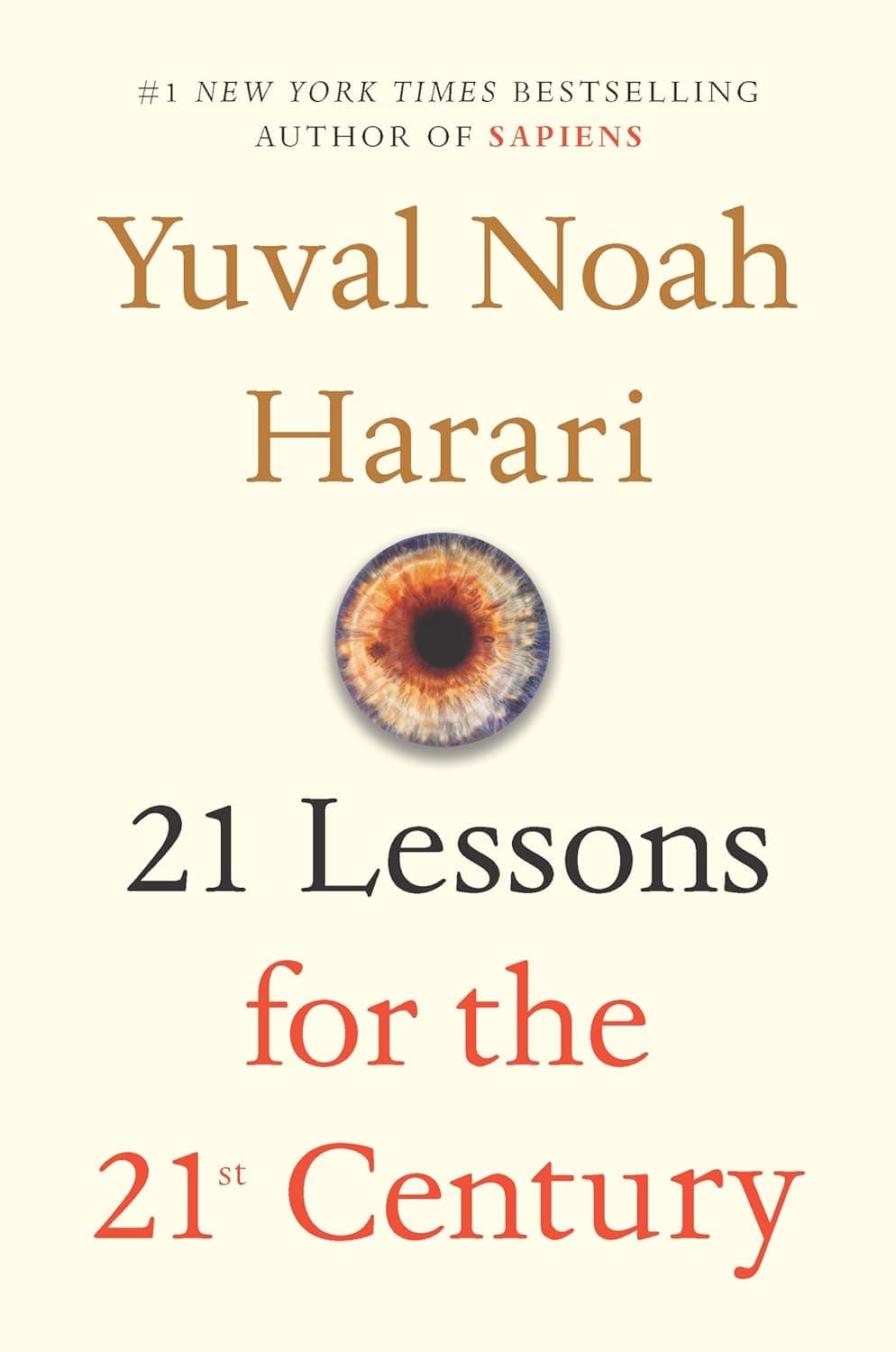
This spoiler free review of 21 Lessons for the 21st Century by Yuval Noah Harari walks through why this narrative nonfiction book that essays on technology, politics, and meaning still hooks readers. This 21 Lessons for the 21st Century review looks at Harari’s essay collection on AI, politics, work, fake news, and meaning, written as a guide for confused citizens living inside a very noisy century.
Full review
This spoiler free review of 21 Lessons for the 21st Century by Yuval Noah Harari looks at how this essay collection tries to guide readers through the noise of AI headlines, political shocks, and constant notifications. Instead of telling a single story, Harari picks 21 questions about power, technology, and meaning and offers short, sharp lessons for people who feel lost in the twenty first century news cycle.
The book is organised into five parts that cover the technological challenge, the political challenge, despair and hope, truth, and resilience. Rather than offering a strict 21 Lessons for the 21st Century summary by chapter, this review groups the ideas by those parts so you can see how Harari moves from automation and artificial intelligence to nationalism, religion, fake news, education, and meditation. Chapters about work, data, and liberty focus on what happens when algorithms know us better than we know ourselves, while political essays probe nationalism, immigration, and global cooperation.
Later sections tackle terrorism, war, and despair, then turn to truth in an age of propaganda, post truth, and science fiction, before ending with resilience through education and mindfulness. Harari is strongest when he connects abstract trends like AI, big data, and ecological risk to everyday questions about jobs, news feeds, and anxiety. Some arguments feel broad or provocative on purpose, yet even when you disagree the framework makes it easier to talk about what really worries you in the twenty first century.
If you have already read Sapiens and Homo Deus and are wondering whether 21 Lessons for the 21st Century is worth reading after Sapiens, the answer depends on what you want next. It adds less new history or far future speculation and more present day guidance about how to think, vote, work, and raise children in a world of constant disruption. Read in that light, as a set of main ideas explained for citizens rather than as a prediction book, it rounds out the trilogy by sitting between past and future at the messy point where decisions are actually made.
Taken together, Sapiens shows where we came from, Homo Deus explores where we might be going, and 21 Lessons for the 21st Century tries to decide what to do right now with that knowledge. A simple best order to read Sapiens, Homo Deus, 21 Lessons is to start with Sapiens for background, move to Homo Deus for future possibilities, then finish with 21 Lessons as a practical, conversation ready guide to the present. If you want that kind of grounded companion, you can pick up 21 Lessons for the 21st Century on Amazon and then revisit our Sapiens review and Homo Deus review to see how Harari’s three books speak to each other.
21 Lessons for the 21st Century Review Highlights
Essay based structure that moves quickly between AI, work, politics, religion, education, and personal meaning.
Clear explanations of complex topics like automation, dataism, nationalism, fake news, and terrorism written for general readers, not specialists.
Completes the informal trilogy with Sapiens and Homo Deus so you can compare past, future, and present in one long conversation.
Who Should Read 21 Lessons for the 21st Century
Nonfiction readers who feel overwhelmed by news, social media, and technological change and want a calmer, big picture map.
Fans of Sapiens and Homo Deus who want to know whether this book adds something new rather than repeating the same stories.
Book clubs, teachers, and students looking for short, self contained chapters that can fuel debates about AI, politics, religion, and work.
Practical Ways to Use 21 Lessons in Real Life
Use the five parts as a loose syllabus for a reading group or class, pairing each section with recent articles about AI, democracy, or climate risk.
Assign different chapters to different readers and let them present the lesson they agree with least to keep discussion grounded and critical.
Treat the final essays on education, meaning, and meditation as prompts for personal reflection rather than as rules, especially if you are uneasy with self help language.
Key ideas
- Technological change in AI, automation, and data collection is not just about gadgets but about who holds power, who works, and how much privacy survives.
- Traditional political stories about nations, religions, terrorism, and war still matter, yet they now sit inside a global system that demands some level of cooperation.
- In a world flooded with information, the real scarce resources are attention, clarity, and the ability to decide which fears are worth taking seriously.
- Resilience in the twenty first century will depend less on memorising facts and more on learning how to learn, how to stay calm, and how to live with uncertainty.
If you liked this, read next
FAQ
- What is 21 Lessons for the 21st Century about?
- 21 Lessons for the 21st Century is a nonfiction essay collection in which Yuval Noah Harari looks at present day problems such as AI and automation, work, nationalism, religion, terrorism, fake news, education, and personal meaning. The book explores how to think clearly about the twenty first century rather than trying to predict exactly what will happen.
- Who will enjoy 21 Lessons for the 21st Century?
- Readers who liked Sapiens and Homo Deus and want a more practical, present focused follow up will get the most from 21 Lessons. It suits curious older teens and adults interested in Non Fiction and Popular Science who prefer big questions and clear examples to technical detail or heavy academic notes.
- What themes stand out in 21 Lessons for the 21st Century?
- Major themes include the social impact of AI and automation, the tension between nationalism and global cooperation, the power of information and disinformation, and the search for meaning when traditional stories feel weaker. Harari also returns to questions about freedom, responsibility, and education that run through all three of his major books.
- Is there anything to know before starting 21 Lessons for the 21st Century?
- It helps to know that 21 Lessons is not a linear narrative but a set of essays grouped into five parts, so you can read it straight through or dip into the chapters that interest you most. If you want the full context, a simple best order to read Sapiens, Homo Deus, 21 Lessons is to start with Sapiens for past, move to Homo Deus for future possibilities, then finish with 21 Lessons as a guide to the present.
Reader-focused angles
This review intentionally answers longer questions readers often ask, such as 21 lessons for the 21st century overview and key ideas about life in the modern world, 21 lessons for the 21st century reading level age recommendation and who will enjoy this book, books like 21 lessons for the 21st century for readers interested in technology politics and big picture essays, and 21 lessons for the 21st century main arguments themes and questions to discuss, so the guidance fits naturally into the analysis instead of living in a keyword list.
Each section of the review is written to speak directly to those searches, making it easier for book clubs, educators, and new readers to find the specific perspectives they need.
Reading guide
- Read one part at a time and pause to list which essays feel most relevant to your own life right now and which already feel dated since the book’s 2018 publication.
- Compare Harari’s lessons on work, liberty, and equality with current debates about AI, remote work, surveillance, and social media regulation in your country.
- If you have read Sapiens and Homo Deus, sketch a simple chart that shows how key ideas from those books reappear in 21 Lessons and how they change when applied to the present.
- For book clubs or classrooms, let each person choose one chapter that annoyed them and one that helped them, then discuss why those reactions were so strong.
As an Amazon Associate, I earn from qualifying purchases.