Review summary
This spoiler free review of The Handmaid's Tale by Margaret Atwood walks through why this classic dystopian novel that a feminist dystopian novel still hooks readers. This The Handmaid's Tale review follows Offred inside the theocratic state of Gilead, where fertility becomes a tool of control and quiet acts of memory and resistance matter as much as open rebellion.
Full review
This spoiler aware but careful review of The Handmaid's Tale by Margaret Atwood looks at how Offred's quiet, claustrophobic story inside Gilead shows what happens when a theocratic regime turns women's bodies into state property. You follow a single Handmaid assigned to a Commander and his wife, forced to undergo ritualized sex in the hope of becoming pregnant while remembering the ordinary marriage, child, and job she had before the coup.
Offred's narration moves back and forth between the time before and the present, so you see how small legal changes, media spin, and religious rhetoric slowly close every door around her. The voice is observant, darkly funny in flashes, and haunted by guilt about the loved ones she could not save. That focus on memory, storytelling, and unreliable detail means this is not just a plot driven dystopia but also a book about how people shape their own stories to stay sane.
If you are interested in the Handmaid's Tale themes of control and religion explained in more depth, the novel keeps showing how verses, symbols, and rituals are twisted to justify surveillance and reproductive control. Gilead is brutal, yet Atwood also pays attention to the shades of complicity and survival among women themselves, from Aunts and Wives to Marthas and Jezebels, so power never feels completely simple or one sided.
For readers wondering if The Handmaid's Tale is worth reading in 2025 after watching the TV series, the answer is yes because the book feels tighter, more ambiguous, and more concerned with how it feels inside one person's head than with big set pieces. The Hulu show continues far beyond the material of the novel, but the original ending, with its academic Historical Notes, adds an extra layer of irony and distance that the screen version cannot fully match.
If you want more books like The Handmaid's Tale and 1984 about totalitarianism and control of private life, this novel sits comfortably alongside titles such as 1984, Brave New World, and Fahrenheit 451 in our shelves. Once you finish Offred's story, you can browse our dystopian fiction collection or look at Atwood's related work in classic literature. When you are ready to pick up the book, you can grab your copy of The Handmaid's Tale on Amazon and read it with those connections in mind.
The Handmaid's Tale Review Highlights
A tightly focused feminist dystopia that shows how everyday freedoms can vanish under the cover of religion and security.
A first person voice that blends fear, dark humor, and longing, making Offred feel painfully human rather than symbolic.
An ending that uses a future academic framing to question who gets to tell history and how regimes are remembered.
Who Should Read The Handmaid's Tale
Readers who want a character driven dystopian novel that sits next to 1984 and Brave New World but puts reproductive rights at the center.
Viewers of the TV series who are curious about the original tone, structure, and book ending that inspired the adaptation.
Book clubs, students, and teachers looking for rich themes of gender, religion, power, and resistance to unpack in discussion.
Gilead Discussion Resources
Compare Offred's memories of the time before with her life in Gilead to track how quickly normal rights can disappear.
Map the different roles women hold in Gilead, from Handmaids and Wives to Aunts and Jezebels, and discuss how each role supports or undermines the system.
Pair The Handmaid's Tale with another totalitarian novel, such as 1984 or Fahrenheit 451, and talk about what each book suggests is most at risk when a regime takes over.
Key ideas
- Religious language and imagery can be used as tools of control when they are fused with state power and stripped of context.
- Limiting reproductive freedom and economic independence is a direct way to limit women's agency and redefine their value.
- Stories, whether whispered into a recorder or presented as official history, shape how future generations understand both cruelty and resistance.
If you liked this, read next
FAQ
- What is The Handmaid's Tale about?
- The Handmaid's Tale follows Offred, a woman forced to serve as a Handmaid in the Republic of Gilead, a theocratic regime that has replaced the United States. Because she is fertile, she is assigned to bear a child for a powerful Commander and his wife, while remembering the life, family, and freedoms she lost.
- Who will enjoy The Handmaid's Tale?
- This novel suits older teens and adults who are comfortable with heavy themes, including sexual coercion, state violence, and religious extremism. It is ideal for readers who like thoughtful dystopian fiction with a slower, introspective pace rather than nonstop action.
- What themes of control and religion stand out in The Handmaid's Tale?
- Atwood highlights how a government can weaponize scripture to justify stripping women of rights, controlling fertility, and punishing dissent. The book looks closely at power, complicity, and how belief can be twisted into a tool for surveillance and obedience.
- Is The Handmaid's Tale worth reading if I already watched the TV series?
- Yes. The book feels tighter, more ambiguous, and more focused on Offred's inner life than the show, which adds new plots and seasons beyond the original material. Reading the novel gives you a clear sense of the core story that everything else is built on.
- How does the ending of The Handmaid's Tale book compare to the TV show?
- Without going into specific scenes, the book ends with an academic conference called the Historical Notes that looks back on Gilead from a safer future, adding a layer of dark humor and distance. The TV series extends June's fight far beyond that point, turning her into a more active, ongoing resistor, while the novel leaves more space for the reader to decide what ultimately happened to Offred.
Reader-focused angles
This review intentionally answers longer questions readers often ask, such as the handmaids tale summary and themes of religious control gender and resistance explained, is the handmaids tale worth reading in 2025 if you already watched the tv series, books like the handmaids tale and 1984 for readers interested in totalitarian regimes and reproductive rights, and the handmaids tale age rating difficult scenes and content guidance for teens and adults, so the guidance fits naturally into the analysis instead of living in a keyword list.
Each section of the review is written to speak directly to those searches, making it easier for book clubs, educators, and new readers to find the specific perspectives they need.
Reading guide
- Underline moments where Offred notices small, practical losses of freedom, such as access to money or work, and discuss which ones would alarm you most in real life.
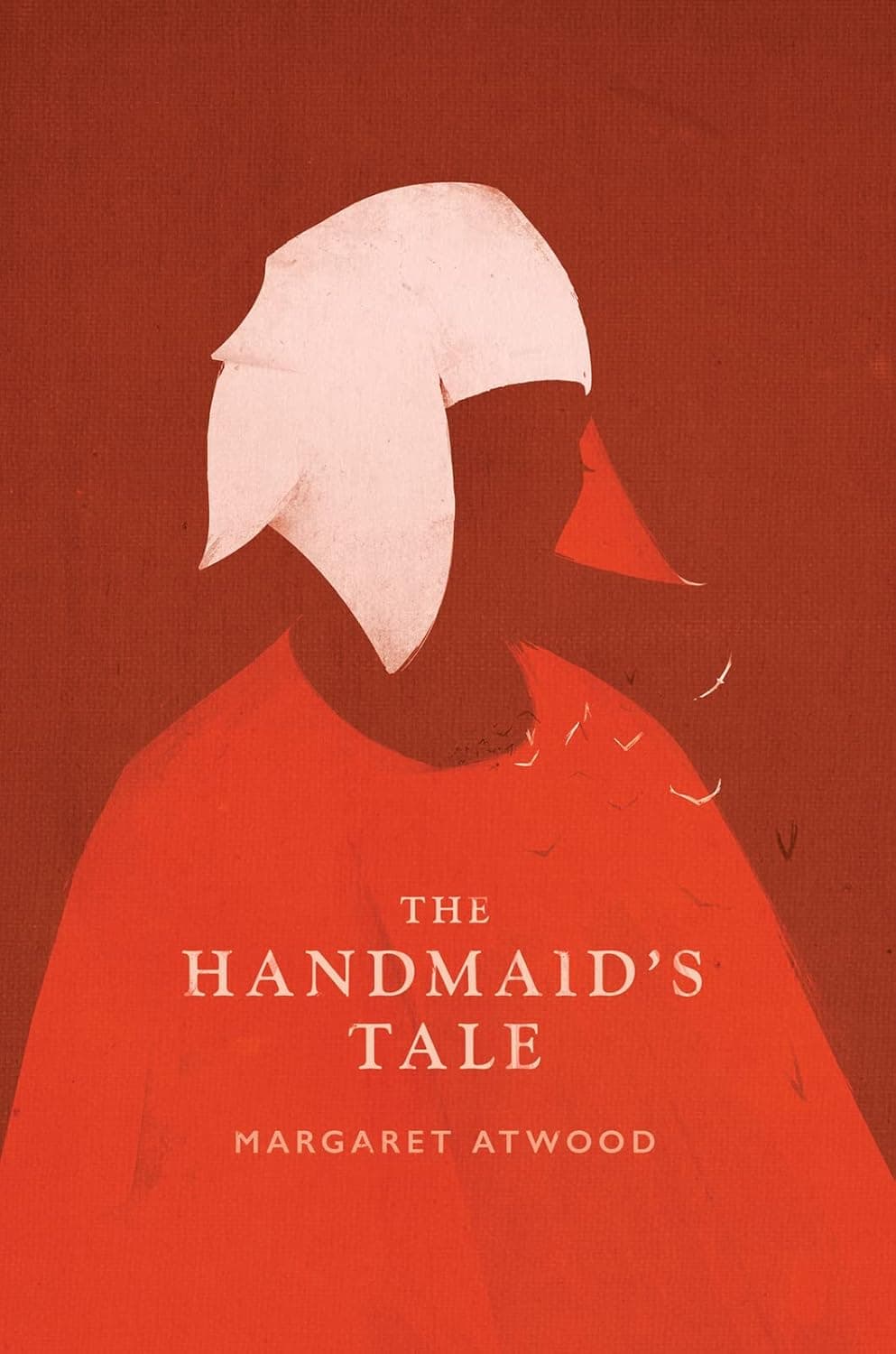
- Pay attention to the color codes and clothing rules in Gilead and talk about how uniforms reinforce hierarchy and surveillance.
- After finishing the Historical Notes, revisit the earlier chapters and ask how the frame changes your sense of what parts of Offred's story feel reliable or incomplete.
As an Amazon Associate, I earn from qualifying purchases.