Review summary
Attorney Peter Evans becomes involved in a pursuit of extremists attempting to manufacture natural disasters, while the novel builds a controversial argument about climate science, environmental advocacy, and media fear.
Full review
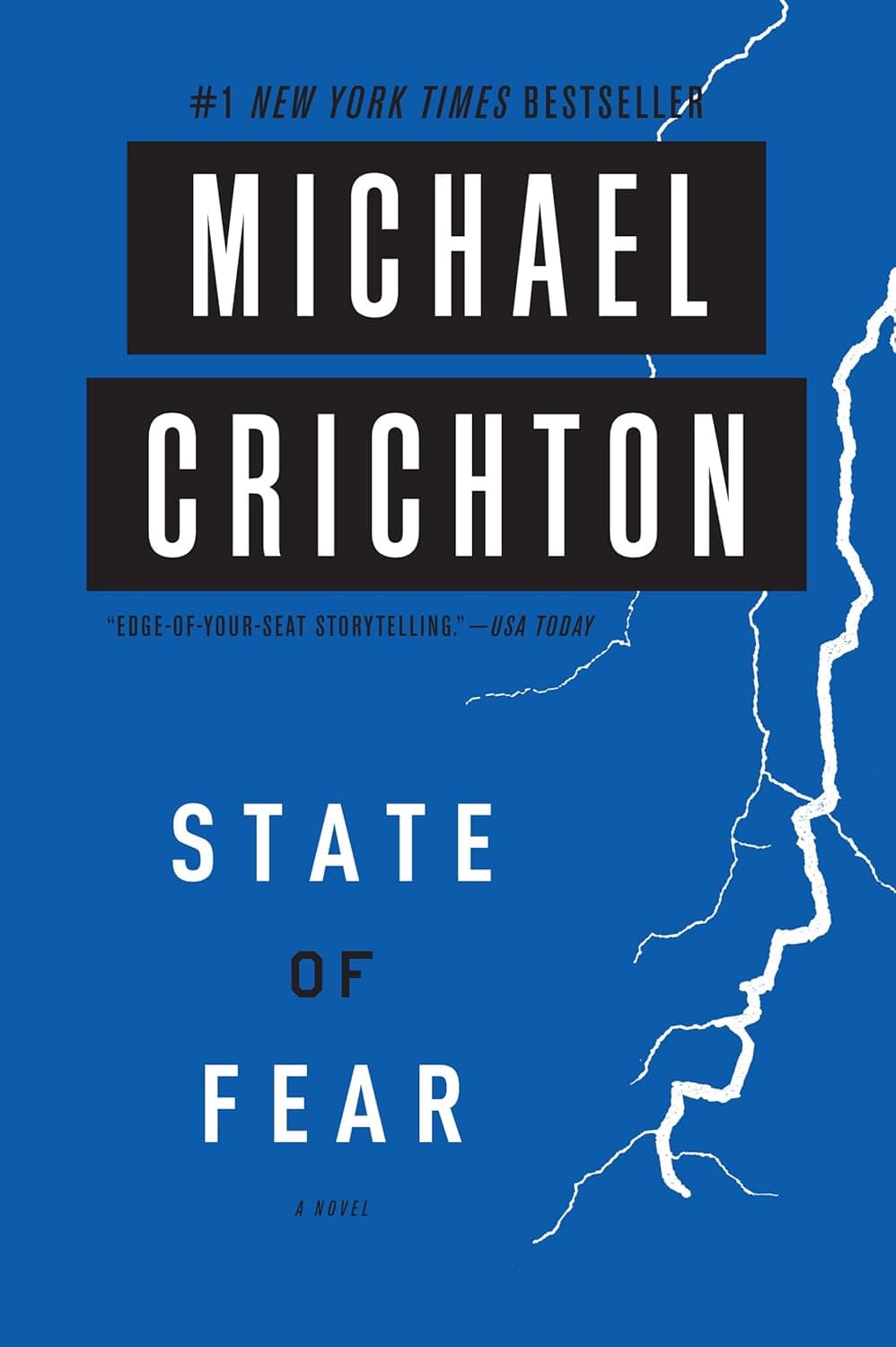
State of Fear follows attorney Peter Evans as he becomes involved in a pursuit of extremists planning disasters that can be presented as evidence of climate catastrophe. Crichton combines action across several environments with graphs, footnotes, and long debates intended to challenge claims made by environmental organizations and the media.
The result is inseparable from its controversy. The novel presents selective arguments that conflict with the broad scientific consensus on human-caused climate change, and its citations do not make the fictional debate a reliable climate-science guide. Readers should distinguish criticism of fear-based communication from conclusions about the physical evidence.
As a thriller, it offers travel, conspiracies, engineered hazards, and rapid reversals, though exposition frequently interrupts the chase. Its useful subject is how institutions can exploit anxiety; its weak point is arranging characters and data to imply greater scientific uncertainty than current assessments support. Read it critically and consult contemporary scientific sources rather than treating its appendices as settled fact.
Thriller and polemic
The action plot repeatedly pauses for arguments, making the book as much a position statement as an adventure.
Citations do not equal consensus
Real references appear inside a selective fictional case and require comparison with comprehensive scientific assessments.
Fear as institutional currency
Crichton examines how media, nonprofits, lawyers, and donors may benefit from sustaining public alarm.
Key ideas
- Institutions can exploit fear without the underlying hazard being false.
- Selective evidence can create artificial balance.
- Scientific consensus is not established through a fictional debate.
- Critical media literacy should apply to the novel itself.
If you liked this, read next
FAQ
- Is State of Fear scientifically reliable?
- No. Its climate argument conflicts with the scientific consensus and uses evidence selectively.
- Is it a climate-change denial novel?
- It is widely read that way because it argues against core conclusions and emphasizes uncertainty, despite acknowledging some warming.
- Can it still work as a thriller?
- Readers may enjoy the action, but the polemic dominates much of the book.
Reading guide
- Do not use the book as a current climate primer.
- Separate the eco-terror plot from real environmental groups.
- Check scientific claims against modern assessments.
- Expect extensive argumentative dialogue.
As an Amazon Associate, I earn from qualifying purchases.