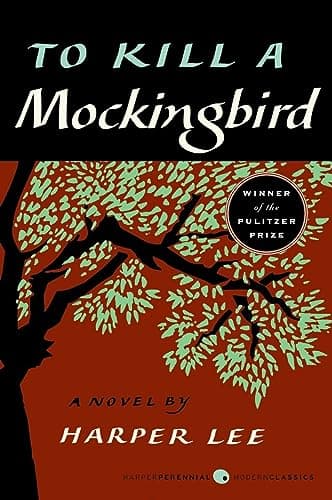
Review summary
Scout Finch recalls a childhood in segregated Alabama as her father Atticus defends a Black man falsely accused of assault, exposing the prejudice beneath their town's familiar routines.
Full review
To Kill a Mockingbird is narrated by Scout Finch, whose memories of childhood move from games and neighborhood mysteries toward the trial in which her father defends Tom Robinson, a Black man falsely accused by a white woman. Her limited understanding allows readers to see how prejudice is taught through ordinary habits as well as public violence.
The novel's empathy and moral clarity made it enormously influential, but modern readers should also examine its limits: Black characters are often seen through a white child's perspective, and Atticus occupies more narrative space than the people most endangered by the racist system.
Childhood beside injustice
Scout's voice makes adult hypocrisy visible without turning her into an all-knowing observer. The contrast between lessons about fairness and Maycomb's conduct drives the novel.
Reading it critically today
Its historical importance and emotional force remain real. Pairing it with work by Black writers offers perspectives the novel does not fully provide.
Key ideas
- Legal procedure cannot guarantee justice inside a prejudiced community.
- Empathy matters but does not substitute for structural change.
- Children learn social hierarchy by watching which rules adults refuse to apply equally.
If you liked this, read next
FAQ
- Is To Kill a Mockingbird based on a true story?
- It is fiction informed by Harper Lee's Alabama childhood and the racial injustice of the Jim Crow South, not a direct account of one trial.
- Why is the book controversial?
- Challenges involve racial slurs and difficult content, while critical debate also examines its white-centered treatment of racism and Black characters.
Reading guide
- Separate Scout's interpretation from what the reader can infer.
- Notice who is allowed to speak during and outside the trial.
- Consider both Atticus's courage and the limits of individual heroism.
As an Amazon Associate, I earn from qualifying purchases.