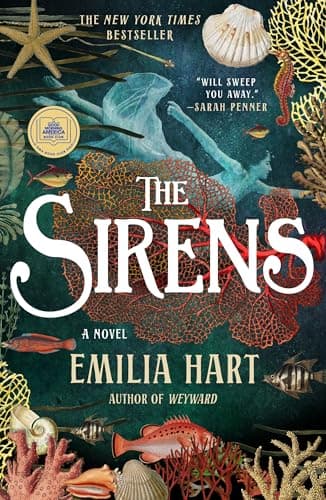
Review summary
Four sisters separated by centuries are drawn together by the sea as Lucy flees to her sister's isolated coastal home and uncovers a family history shaped by dreams, disappearances, and folklore.
Full review
The Sirens follows Lucy to her sister Jess's isolated house on the Australian coast after a frightening episode at university. Jess is missing, Lucy is troubled by vivid dreams, and local history points toward women whose lives and disappearances have long been tied to the sea.
Emilia Hart moves between contemporary sisters and women separated from them by centuries. Family mystery, historical hardship, bodily change, and sea folklore gradually converge in an atmospheric story about inheritance and the stories used to contain women.
Four sisters across time
The timelines build echoes around separation, survival, and the ocean. The mystery depends less on rapid clues than on recognizing what one generation has passed to another.
For readers of Weyward
Both novels combine women's history, family pain, nature, and subtle magic. The Sirens shifts its element from land to water and gives sisterhood the central role.
Key ideas
- Family inheritance includes stories, fears, and forms of resistance.
- Folklore can disguise violence while preserving traces of its victims.
- The sea represents danger, transformation, and belonging at once.
If you liked this, read next
FAQ
- Is The Sirens a fantasy novel?
- It blends historical and contemporary family mystery with magical realism and sea folklore.
- Is The Sirens connected to Weyward?
- No. It is a standalone novel, although it shares Emilia Hart's interest in women, inheritance, nature, and hidden power.
Reading guide
- Keep the historical and contemporary sisters distinct.
- Track recurring dreams, physical signs, and local legends.
- Notice who controls the public account of each disappearance.
As an Amazon Associate, I earn from qualifying purchases.