Review summary
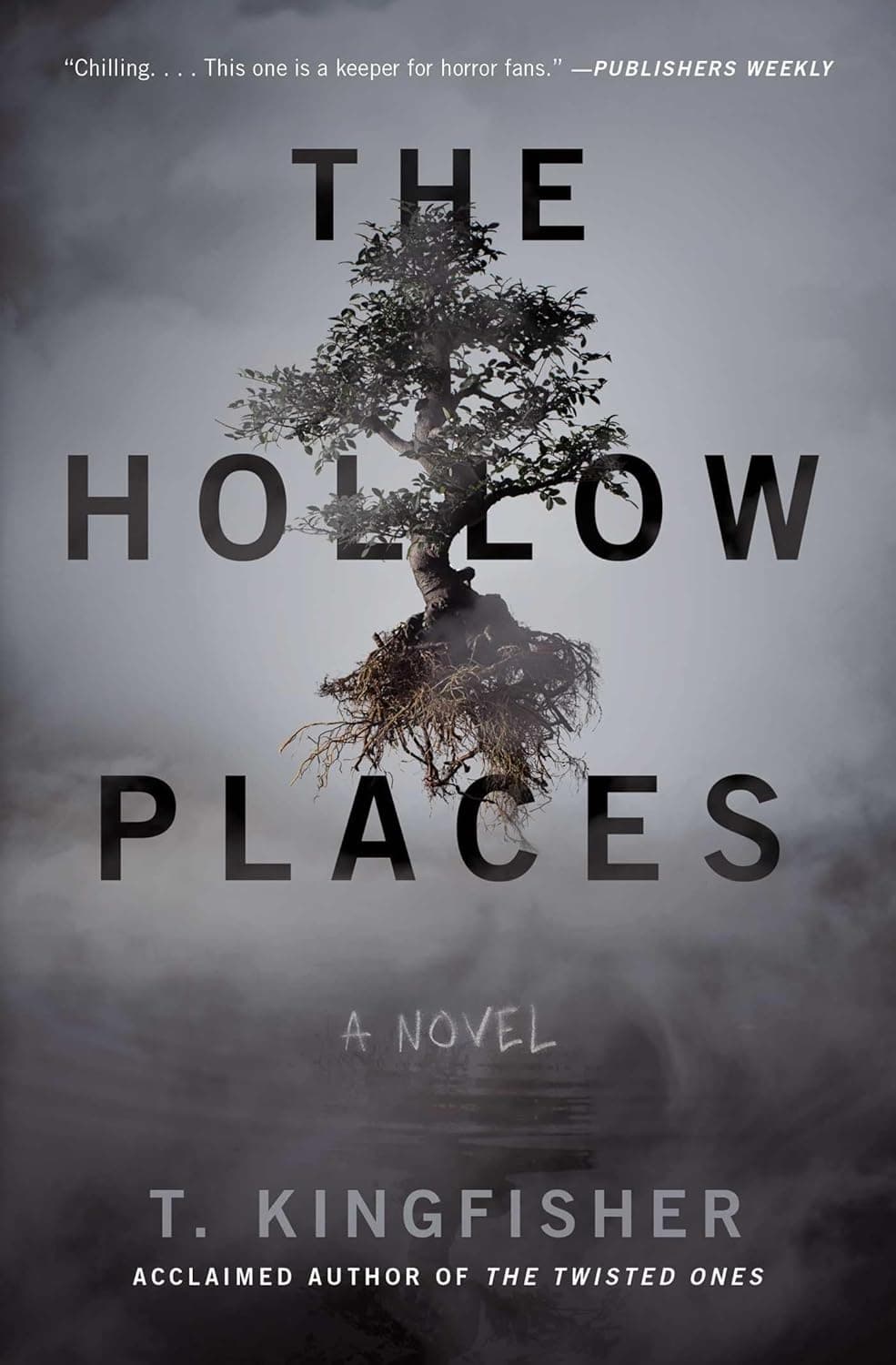
Recently divorced Kara discovers a hole in her uncle's oddities museum that opens into a world of endless bunkers and willows, where unseen creatures can hear human thoughts.
Full review
After a divorce leaves Kara without money or direction, she moves into the Wonder Museum operated by her uncle Earl. Its taxidermy, mermaids, and questionable artifacts are comfortably strange until Kara and Simon, the barista next door, find a hole leading somewhere much larger than the building could contain.
Beyond the wall lies an island-filled world of willows and concrete bunkers connected to countless realities. The place seems empty until evidence suggests that its inhabitants notice thought itself. Kingfisher uses the need not to think about danger as both a frightening rule and an impossible mental trap.
Kara's conversational narration and her friendship with Simon keep the novel lively without dissolving the cosmic dread. The final movement returns the horror to intimate, familiar spaces, asking whether a door can ever be fully closed once another world has recognized what lies on this side.
A portal that makes escape feel smaller
Portal fantasy usually promises wonder and expansion. Here, every opening implies exposure. The endless bunkers and alternate worlds make human reality feel fragile, while the willows conceal creatures whose motives cannot be translated into ordinary predator behavior.
Humor inside cosmic horror
Kara and Simon joke because they are frightened people trying to keep moving, not because the danger is harmless. Their practical friendship gives the story emotional stability and avoids forcing romance into a situation already crowded with existential terror.
Scares, inspiration, and audience
Inspired by Algernon Blackwood's The Willows, the novel favors unseen entities, impossible geography, taxidermy unease, and fear of being noticed. It includes body horror and animal imagery but balances them with warmth, making it approachable for readers new to cosmic horror.
Key ideas
- A doorway is also a way for something else to enter.
- The mind becomes vulnerable when attention itself attracts danger.
- Platonic companionship can be the strongest defense against isolation.
- Familiar objects become uncanny when their history cannot be trusted.
If you liked this, read next
FAQ
- Is The Hollow Places connected to The Twisted Ones?
- No. They are separate standalone horror novels, though both combine literary inspiration, practical narrators, humor, and portals to uncanny worlds.
- Is The Hollow Places very scary?
- Its strongest fear comes from unseen cosmic creatures, thought monitoring, body distortion, and unsafe familiar spaces. The humor provides relief without removing the threat.
- Does The Hollow Places have romance?
- No central romance. Kara and Simon build a supportive platonic friendship while exploring and surviving the portal.
Reading guide
- Map the museum, bunker, and willow world separately.
- Notice the difference between what Kara sees and what she infers.
- Pay attention whenever an object seems slightly misplaced or altered.
- Read The Willows afterward if you want to compare the shared imagery.
As an Amazon Associate, I earn from qualifying purchases.