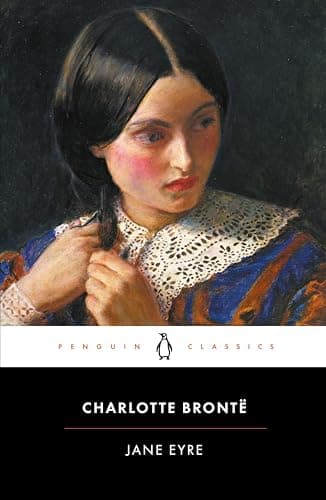
Review summary
Orphaned Jane Eyre survives cruelty and deprivation before becoming governess at Thornfield Hall, where love for Mr. Rochester tests her independence, conscience, and need for equality.
Full review
Jane Eyre follows its narrator from an abusive childhood and harsh school into work as a governess at Thornfield Hall. Her attraction to Rochester is powerful, but Jane repeatedly measures love against conscience and the independence she has fought to build.
Charlotte Brontë combines a development novel, Gothic mystery, spiritual argument, and romance. Jane's first-person intensity makes the book emotionally immediate, while its treatment of Bertha Mason and empire requires critical historical attention.
A romance built around equality
Jane refuses to treat economic dependence or passion as proof that she must surrender moral agency. Her demand to be recognized as an equal is the relationship's defining standard.
Gothic secrets and historical limits
Thornfield's noises and hidden history generate suspense, but the novel marginalizes Bertha through racialized and ableist Victorian language. Modern editions should contextualize that portrayal.
Key ideas
- Independence means retaining conscience within intimacy.
- Economic vulnerability shapes which choices appear available.
- A first-person claim to freedom can coexist with another woman's confinement.
If you liked this, read next
FAQ
- Is Jane Eyre a romance?
- Yes, but it is also a coming-of-age novel and Gothic story centered on Jane's moral, economic, and spiritual independence.
- Is Jane Eyre difficult to read?
- Its length and Victorian prose require patience, but Jane's direct voice and clear life stages make the narrative accessible.
Reading guide
- Track how each household defines Jane's value.
- Compare Rochester's secrets with Jane's insistence on honesty.
- Read Bertha's portrayal in its colonial and gendered context.
As an Amazon Associate, I earn from qualifying purchases.