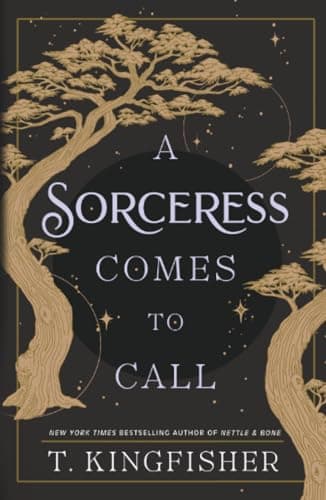
Review summary
Cordelia knows her controlling mother is an evil sorcerer; when they enter a kind squire's household, she must resist magical obedience and help her new allies survive the woman's plans.
Full review
Cordelia lives under the magical control of her mother, Evangeline, an ambitious sorcerer who can force her into silent obedience. When Evangeline targets a wealthy squire, Cordelia enters a household where the practical Hester quickly recognizes that something is wrong.
Inspired by The Goose Girl, the novel turns fairy-tale elements into domestic horror about coercive control. T. Kingfisher balances Cordelia's fear with Hester's dry intelligence and a group of adults willing to believe the vulnerable person in front of them.
Magic as abuse and control
The most frightening power is not spectacular spellwork but Evangeline's ability to override another person's body. Cordelia's recovery begins with people who accept that her fear is rational.
Darkness with humane humor
Murder, possession, abuse, and an uncanny horse create real horror, while older protagonists and social comedy keep the story from becoming emotionally airless.
Key ideas
- Believing a victim can be the first practical form of rescue.
- Courtesy becomes dangerous when it protects an abuser from scrutiny.
- Chosen family can teach autonomy after prolonged control.
If you liked this, read next
FAQ
- Is A Sorceress Comes to Call a Goose Girl retelling?
- It is a loose, dark reimagining that uses elements such as the magical mother and horse while creating a substantially new plot.
- Is it suitable for younger readers?
- It centers a teenage character but is adult fantasy horror involving abuse, murder, coercion, and disturbing magical control.
Reading guide
- Notice the limits and costs of Evangeline's magic.
- Compare Cordelia's learned obedience with Hester's social confidence.
- Track how the household moves from suspicion to cooperation.
As an Amazon Associate, I earn from qualifying purchases.